


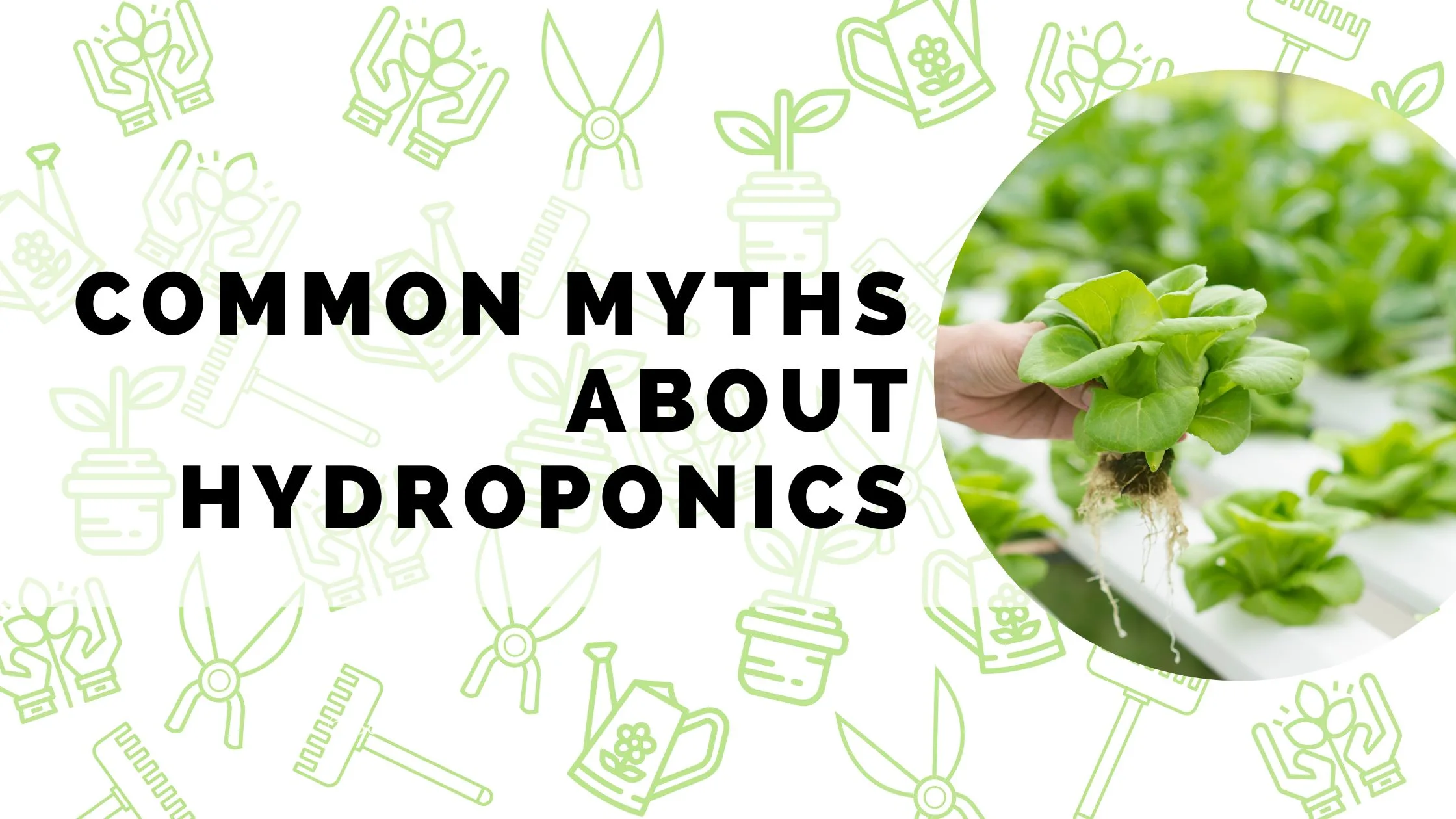
Hydroponics has been around for decades, yet it’s still surrounded by misconceptions.
Myth 1: Hydroponics Is Only for Commercial or High-Tech Growers
One of the biggest misconceptions is that hydroponics is complicated, expensive, or only suitable for large-scale operations.
In reality, hydroponics can be as simple or as advanced as you want it to be. Many home growers start with basic systems using buckets, trays, or small reservoirs. With the right setup, hydroponics can even be easier to manage than traditional soil growing, as watering and feeding are more controlled and predictable.
Myth 2: Plants Grown Hydroponically Are “Unnatural”
This myth often comes from the idea that plants must grow in soil to be healthy.
Plants don’t actually need soil. They need nutrients, water, oxygen, and support for their roots. Hydroponics simply delivers these elements directly, without relying on soil as a middleman. In fact, hydroponic growing often allows for better control over what plants absorb, since hydroponic nutrients are precisely measured and consistently available.
Myth 3: Hydroponic Nutrients Are Harmful or Synthetic Chemicals
Hydroponic nutrients are often misunderstood as harsh or unsafe. The truth is that plants absorb nutrients in the same ionic form whether they come from soil or a hydroponic solution.
In soil, nutrients must first break down before plants can access them. In hydroponics, those nutrients are already available, which is why growth is often faster and more efficient. When used correctly, hydroponic nutrients are safe, effective, and designed to support balanced plant development from root to harvest.
Myth 4: Hydroponics Doesn’t Need Growing Mediums
Many people assume hydroponics means plants grow only in water. While some systems do use bare roots, most hydroponic setups rely on hydroponic growing mediums to support plants and manage moisture and oxygen at the root zone.
Popular hydroponic growing mediums include coco coir, perlite, clay pebbles, and rockwool. These materials don’t feed the plant. They provide structure, airflow, and water retention while allowing nutrients to flow freely.
Myth 5: Hydroponics Uses More Water Than Soil Growing
This myth couldn’t be further from the truth.
Hydroponics is widely recognised as one of the most water-efficient growing methods available. Because water is recirculated or delivered directly to the roots, far less is wasted through evaporation or runoff. In water-scarce regions, hydroponics can be a smarter and more sustainable alternative to traditional soil growing.
Myth 6: Hydroponics Is High Maintenance
While hydroponics does require monitoring, it’s not inherently more work than soil growing — it’s just different work.
Instead of guessing when to water or feed, growers focus on consistency: checking pH, monitoring nutrient strength, and maintaining clean systems. Once a routine is established, hydroponics often becomes more predictable and less time-consuming than soil-based growing.
Myth 7: Hydroponics Is Less Forgiving Than Soil
It’s true that hydroponics responds faster to mistakes — but that’s also one of its strengths.
Because plants receive nutrients and water directly, adjustments take effect quickly. Issues like nutrient imbalances or pH drift can often be corrected within days, rather than weeks. With the right understanding of hydroponic nutrients and growing mediums, growers gain far more control over plant health than they ever could with soil.